Why Don't I Understand My Partner?
By TestMyTraits team··6 min read
"Why don't I understand my partner?" (or "why don't they understand me?") usually comes up after the same argument has happened for the fifth time. They go quiet and you assume something's wrong. You make a plan and they treat it as a suggestion. You bring up a problem the moment you notice it, and they ask to talk tomorrow, which to you sounds like never. Neither of you is being unreasonable by your own standards. That's exactly why it keeps happening.
A lot of this comes from two people having different defaults for the same situations: how much contact feels close, how fast a problem should be raised, what counts as proof that someone cares. This piece goes through the most common ones. One rule shapes how it's written: it's about seeing your own side. A guide that teaches you to diagnose your partner by their letters makes these conversations worse. And nothing about type predicts whether a relationship will work.
Space: when "I need a night in" sounds like "I need a break from you"
If you recharge alone, a quiet evening after a busy week is just maintenance. It isn't a message. If you recharge with people, that same evening can feel like being shut out, especially with no explanation. Both reactions make sense from the inside, and both people end up feeling a bit rejected: one for needing space, the other for wanting company.
If you're the one who pulls back, your silence means more to your partner than it does to you. One sentence fixes most of it: "I'm wiped. It's not about you. Can we do something tomorrow?" If you're the one who reaches out, the pulling back is very often about their energy, not the relationship. Checking before assuming saves you both a bad night. Skip that step, on either side, and you end up arguing about something neither of you actually felt.
Conflict: now, or after sleeping on it
Some people need to deal with a problem while it's fresh. Leaving it overnight feels like it's being ignored. Others need time to work out what they think before they talk, and being pushed to answer on the spot gets answers they later take back. Put the two together and one hears "can we talk tomorrow?" as avoiding it, while the other hears "we need to talk now" as an ambush.
If you raise things right away, you often get the defensive version of your partner instead of the thoughtful one. If you need time, "later" with no time attached sounds exactly like "never," and your partner is left carrying the problem alone overnight. Naming a time, like "tomorrow after dinner," usually works for both of you. It's a small thing, but it turns a standoff into a plan.
Care: words, plans, or small everyday things
People differ a lot in what counts as proof that someone cares. For some it's hearing it said. For some it's a planned experience. For others it's the everyday stuff: the charger packed, the question about how the appointment went. The misunderstanding happens when you give care your way and watch for it your way, and your partner does the same in theirs. You can both be trying hard and both feel unappreciated.
Your side of it: if you keep feeling your partner doesn't show much, check whether they're showing it in a way you're not counting. And if you're the steady, practical one, your care can go unseen precisely because it's so reliable. Saying it out loud now and then isn't being needy. The animal and love-style quizzes below are both built around this difference in how people show affection.
Plans: the calendar vs. the open weekend
If you like the weekend settled by Thursday, a partner who wants to "see how we feel" can seem uncommitted. If you like deciding on the day, a partner who books everything in advance can seem controlling. Most couples have some version of this, and it's rarely about the weekend. It's about whether each person feels their preference counts.
The planner can end up missing the good things that only happen unplanned, and can make a partner feel managed. The open-weekend person can leave someone else doing all the organising and dealing with the uncertainty. Splitting it, with some things fixed and some left open, works better than either of you converting.
When this stops being about style
Style differences explain a lot of recurring friction. They don't explain everything, and they should never be used to excuse behaviour. Contempt, name-calling, controlling who you see or what you spend, checking your phone, or making you afraid to bring things up are not personality clashes, whatever the letters say. If any of that is part of the pattern, call it what it is. Talking to someone you trust, or a professional, is a better next step than any quiz.
One more limit: understanding a difference doesn't mean you have to go along with it forever. Sometimes two people understand each other perfectly well and still want things that don't fit together. Knowing the pattern makes that conversation clearer. It doesn't make the decision for you.
Start with your side
The most useful question here isn't "what type is my partner?" It's "which of these do I do, and how does it look from the other side?" The quizzes below each look at one habit: what animal you'd turn into, which pair pulls you in, what you do with something you want to say. The full test measures all four scales. Taking the same quiz separately and comparing answers is also an easier way to start one of these talks than opening with the argument itself.
Common questions
Is it normal to not understand your partner sometimes?
Yes. Most long-running arguments between couples are about a few recurring situations (space, when to deal with conflict, how care is shown, plans) where each person's default makes sense on its own terms. Misunderstanding each other there is common, and usually fixable once you can both name what's going on.
Can personality types tell us if we're compatible?
No. Nothing about a four-letter type predicts whether two people will get along or stay together. What type can do is give you both words for your defaults, which makes the recurring arguments easier to talk about. Use it as shared words, not as a ruling on your relationship.
My partner goes quiet when upset. Does that mean they don't care?
Often it means the opposite. They may be trying not to say something they'll regret, or need time to work out what they think. It usually helps to agree on a time to come back to it, so the quiet has an end. If silence is used to punish or control, that's different, and worth calling out.
Should we both take a personality test?
It can help, if you use it to talk about yourselves, not to explain each other away. Comparing answers on a one-question quiz is an easy way to start. The full test shows how strongly each of you leans, which matters: if you're both near the middle on a scale, the difference may be about the situation.
Tests that fit this
Picked for this topic. The quick ones take a few seconds; the full test measures all four scales.

Which animal are you?
A love-style read on what you do when you really like someone: stand your ground or keep it inside.
1 question · 6 choices →




Which pair pulls you in?
Which kind of closeness you're drawn to. Take it separately and compare answers.
1 question · 4 choices →
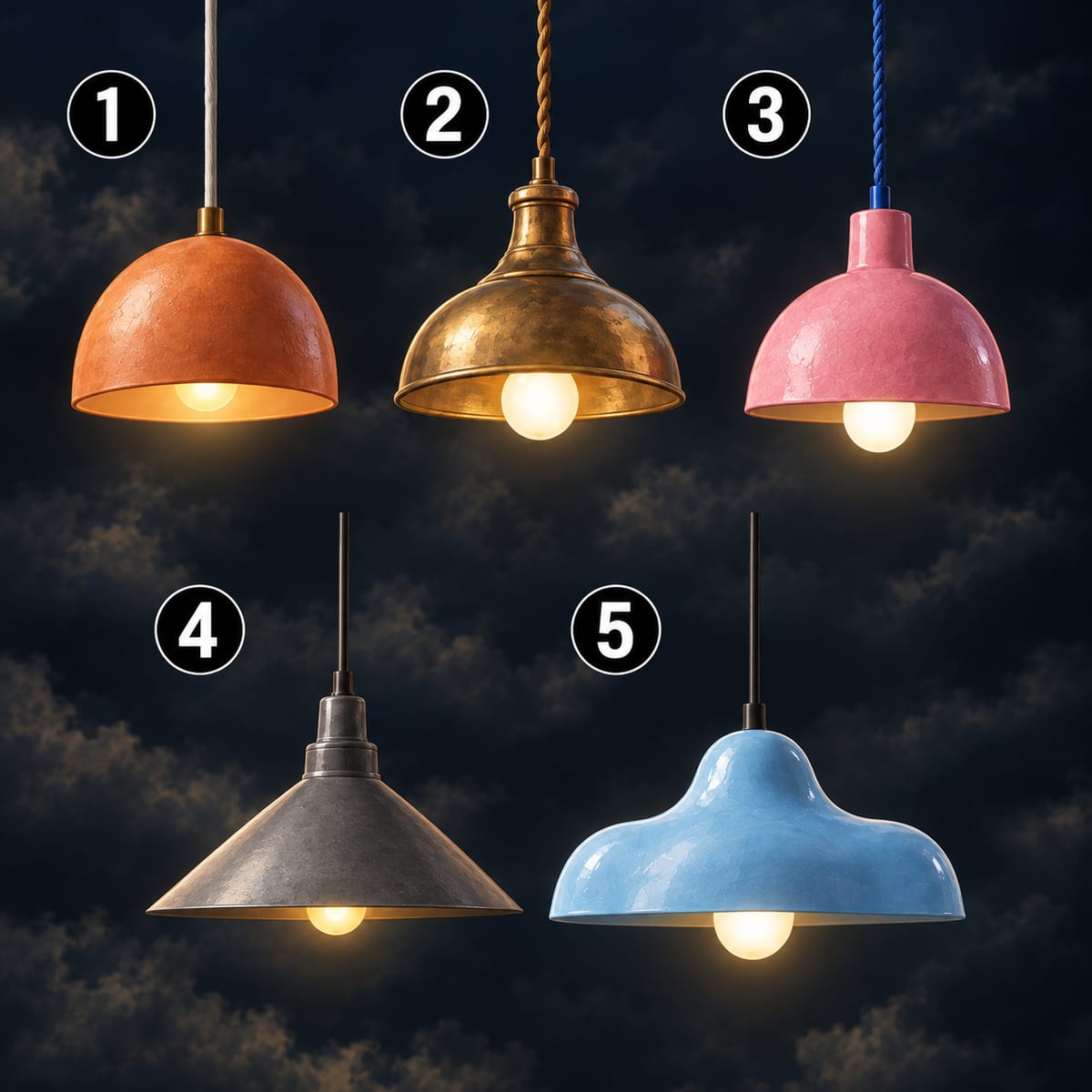
Which lamp is yours?
Shows whether you hold in, say, or overthink the thing you want to bring up.
1 question · 5 choices →
Free personality test
All four scales with strength scores, so you can see which differences are real and which are close calls.
Start →