Does your personality fit your dog breed?
By TestMyTraits team··9 min read
Search for a dog that suits your personality and you'll find charts that pair breeds with star signs, letter types and more. They're fun. They also rest on the idea that a breed comes with a fixed personality. A 2022 study of more than 18,000 dogs found that idea is mostly wrong.
Your personality still matters, just not in the way the charts suggest. This piece goes through what the research says about breed, about owners who match their dogs, and about what makes a home work for both of you.
Breed sets the odds, not the dog
The biggest study so far, published in Science in 2022, combined owner surveys on 18,385 dogs with DNA from 2,155 of them. Breed explained about 9% of the differences in behaviour between individual dogs. For looks, breed mattered about five times as much.
Breed was most useful for predicting how readily a dog takes direction, which researchers call biddability. It said almost nothing about how easily a dog gets provoked. The authors found no behaviour that belongs to one breed alone. Even among Labradors, the breed least likely to howl, 8% of owners said their dog howls.
So a breed description tells you about the average dog of that breed. The dog in front of you can be a long way from average.
- 9%of a dog's behaviour explained by breedAcross 18,385 dogs, breed was a small part of the story. Each dog's own nature, life and training made up most of it.Source 1
- 8%of Labradors howl, say their ownersLabradors were the breed least likely to howl, and some still did. No behaviour was exclusive to any breed.Source 1
Some breed differences are real, just not the famous ones
Breeds do differ on average. A study of more than 30 breeds found dachshunds, Chihuahuas and Jack Russell terriers had the highest reported rates of biting or trying to bite people. Golden retrievers, Labradors and greyhounds were among the least aggressive. A second study of 8,301 dogs across 49 breeds found that the shorter the breed, the more often owners reported aggression aimed at themselves.
Breeding line mattered too. English springer spaniels bred for the show ring were more aggressive than ones bred for work in the field. Same breed name, different dogs. All of these numbers come from owners filling in questionnaires, so they show what owners notice and report.
- 30+breeds compared for aggressionDachshunds, Chihuahuas and Jack Russells topped the list for biting or trying to bite people. Goldens and Labs were near the bottom.Source 7
- 8,301dogs: shorter breeds, more owner-directed aggressionAcross 49 breeds, owners reported more aggression toward themselves as the breed's average height went down.Source 11
Do owners and dogs match?
In a study of 389 owners and their dogs in Vienna and Budapest, owners and dogs scored alike on all five big personality traits. Most of the overlap held up when someone other than the owner rated the dog, so it wasn't only owners seeing themselves in their pets. How long they had lived together made no difference.
The look-alike effect works the same way. When strangers saw an owner and two dogs, they picked the right purebred dog more often than chance. They couldn't do it with mixed breeds, and years together didn't help. People seem to choose dogs that fit them, rather than growing into each other.
Then there's the dog person and cat person split. In 4,565 people, self-described dog people were a little more outgoing, agreeable and organised. Cat people were a little more open and a little more anxious. The researchers called the gaps small, and that study compared dogs with cats, not one breed with another.
- 389owner and dog pairs with similar personalitiesThe match showed up across all five traits and didn't grow with time together. People choose dogs like them.Source 3
- 45pairs in the look-alike testStrangers matched purebred dogs to their owners from photos. With mixed breeds they did no better than chance.Source 4
How your personality shows up in your dog
In an online survey of 1,564 owners, dogs had a few more behaviour problems when their owners scored lower on emotional stability, agreeableness, extraversion or conscientiousness. Training style showed a clearer link. Owners who used harsh or confrontational methods reported more aggression, more barking and more trouble when the dog was left alone. This is a link, not proof of cause, and owners rated their own dogs.
A smaller study measured stress hormones in hair from 58 dogs and their owners. Dog and owner stress levels rose and fell together over months. But the owner's personality didn't work the way most people would guess. Owners who scored higher on anxiety tended to have dogs with lower stress levels. So the claim that a nervous owner makes a nervous dog isn't well supported. The effects are small and the evidence points both ways.
- 1,564owners: personality linked to dog behaviour, modestlyHarsh training went with more aggression and barking. What you do with your dog shows up more clearly than who you are.Source 5
- 58dog and owner pairs: stress moved togetherStress hormones rose and fell together, but anxious owners didn't have more stressed dogs.Source 6
What makes a match last
When dogs are given up, the reasons are usually practical. In the UK, the 2,806 dogs handed to 14 Dogs Trust centres most often came in because of problem behaviour, or because the dog needed more attention than the owner could give. A US study compared 427 surrendered dogs with 427 pet dogs of the same breeds and sex. The surrendered dogs scored higher on energy, on excitability and on how hard they were to train.
A dog's own life matters as well. In a study of 14,004 dogs, calmness, trainability and boldness were mostly predicted by the dog's age, sex, neutering, how old it was when it joined the family, and how much training it had had.
So start with the questions that decide whether you can live together. How many hours a day can you give a dog? How much exercise do you like? Do you want a dog that's eager to follow cues, or are you fine with one that makes up its own mind? Your answers say more about fit than any breed chart, and they're what will matter on a wet Tuesday in February.
- 2,806dogs given up at UK rescue centresProblem behaviour and needing more attention than the owner could give were the most common reasons.Source 9
- 427surrendered dogs compared with 427 pet dogsAgainst pet dogs of the same breed and sex, surrendered dogs were more energetic, more excitable and harder to train.Source 8
Where your type fits in
If you know your own leanings, use them as questions to ask yourself. Someone who leans introverted might love a dog that's happy with a quiet evening. Or they might want a sociable dog that gets them out and talking to neighbours. Someone who leans toward structure may enjoy training a dog that likes clear rules. Someone who leans toward spontaneity should be honest about whether they'll keep up a daily walk at 7am.
None of this picks a breed for you. It tells you what to look for in the individual dog. Given that 9% figure, the individual dog is where the real answer is. Meet them, ask about their history, and watch how they behave on a second visit. And if you'd like the playful version, the dog breed quiz matches you to one of six dogs in a single tap.
A dog breed for each personality type
Here's one breed per type, picked on daily life rather than on a fixed breed personality. Each pick lines up a breed's usual needs (exercise, company, training, time alone) with how that type tends to spend a day. Each card also says what the breed asks of you in return.
Treat the list as a starting point. Breed explains about 9% of what a single dog does, so the dog you meet can be far from its breed's average, and a mixed breed from a shelter may suit you better than any name here.
- INTJ · The Strategist
Shiba Inu
Independent, tidy and fine with time on their own, which suits someone who guards long stretches of focus. Shibas don't obey just because you asked, so cooperation is earned with patience, not commands.
- INTP · The Theorist
Basenji
A quiet, curious problem-solver that rarely barks, good company for someone who lives in their head. Basenjis are known escape artists, so the fence check and the daily walk can't slide when a project takes over.
- ENTJ · The Director
German shepherd
Quick to learn and happiest with a clear job, which fits someone who likes goals and structure. They need daily training and real exercise, and they cope badly with long days left alone.
- ENTP · The Challenger
Jack Russell terrier
Clever, fast and always testing the rules: a sparring partner for someone who enjoys a challenge. Jack Russells need consistent training long after the novelty wears off, which is the part ENTPs tend to drop.
- INFJ · The Confidant
Rough collie
Gentle and tuned in to the people they live with, suiting a calm home with a close circle. Collies can be vocal, need regular grooming, and don't like long stretches alone.
- INFP · The Dreamer
Greyhound
Soft-natured and often happy to nap most of the day, which suits slow, quiet evenings. They still need a safe place to sprint, and many will chase small animals, so the lead stays on near roads.
- ENFJ · The Mentor
Golden retriever
Friendly with everyone, easy to train and happiest in the middle of family life, much like someone who keeps a group together. Goldens need plenty of company and exercise, and they shed all year.
- ENFP · The Enthusiast
Beagle
Cheerful and sociable, always off to investigate something new. A beagle follows its nose first, so coming back when called takes steady training, and a bored one will howl about it.
- ISTJ · The Steward
Labrador retriever
Steady and happy with a routine, which suits someone who likes things done the same good way each day. Labs gain weight easily, so the routine has to include proper walks, not just meals on time.
- ISFJ · The Anchor
Bernese mountain dog
Gentle, loyal and devoted to their family, a fit for a home built around looking after others. They're big, shed heavily and need room, so they ask a lot of space and time.
- ESTJ · The Organizer
Pembroke Welsh corgi
A herding dog that likes order and will try to organise everyone, much like someone who runs the group. Corgis turn bossy if you let them, and need training to stop nipping at heels.
- ESFJ · The Connector
Cavalier King Charles spaniel
Affectionate and eager to please, happiest on the sofa with whoever's visiting. Cavaliers struggle when left alone for long, and the breed has known heart problems worth asking a breeder about.
- ISTP · The Troubleshooter
Australian cattle dog
Tough, practical and independent, a working dog for someone who'd rather be doing than talking. They need a real outlet every day, and a bored cattle dog will invent its own work.
- ISFP · The Maker
French bulldog
Easygoing and happy with short walks, suiting someone who lives in the moment and likes home comforts. Their flat faces make heat and hard exercise risky, so summer care and vet bills need planning.
- ESTP · The Operator
Siberian husky
Built to run and always up for an outing, a partner for someone who likes action. Huskies need hours of activity, slip out of gaps you didn't know were there, and rarely come back just because you called.
- ESFP · The Improviser
Boxer
Playful, a bit of a clown and keen on people: the dog that makes a party better. Boxers stay bouncy for years and need firm, kind training so the jumping doesn't get out of hand.
Common questions
Does breed determine a dog's personality?
Only a little. In a study of 18,385 dogs, breed explained about 9% of the differences in behaviour between individual dogs. Breed shifts the odds for traits like how readily a dog takes direction, but each dog's own nature, history and training matter more.
Do dogs really resemble their owners?
Somewhat. Owners and dogs tend to have similar personality traits, and strangers can match purebred dogs to their owners from photos better than chance. It seems to come from people choosing dogs like themselves, since time together didn't make the match stronger.
Can my personality make my dog anxious?
The evidence is mixed. One survey found owners lower in emotional stability reported a few more behaviour problems. A hair-cortisol study found the reverse of what most people expect: more anxious owners had dogs with lower stress levels. Training style showed a clearer link than personality did.
What should I match first when choosing a dog?
Energy, time and training needs. Those are behind most dogs being given up. Meet the individual dog, ask about its history, and be honest about how many hours a day you can give it.
Sources
- Morrill et al. (2022). Ancestry-inclusive dog genomics challenges popular breed stereotypes. Science
- Gosling, Sandy & Potter (2010). Personalities of self-identified "dog people" and "cat people". Anthrozoös
- Turcsán et al. (2012). Birds of a feather flock together? Perceived personality matching in owner–dog dyads. Applied Animal Behaviour Science
- Roy & Christenfeld (2004). Do dogs resemble their owners? Psychological Science
- Dodman, Brown & Serpell (2018). Associations between owner personality and psychological status and the prevalence of canine behavior problems. PLOS ONE
- Sundman et al. (2019). Long-term stress levels are synchronized in dogs and their owners. Scientific Reports
- Duffy, Hsu & Serpell (2008). Breed differences in canine aggression. Applied Animal Behaviour Science
- Powell et al. (2021). Relinquishing owners underestimate their dog's behavioral problems. Frontiers in Veterinary Science
- Diesel, Brodbelt & Pfeiffer (2010). Characteristics of relinquished dogs and their owners at 14 rehoming centers in the United Kingdom. Journal of Applied Animal Welfare Science
- Kubinyi, Turcsán & Miklósi (2009). Dog and owner demographic characteristics and dog personality trait associations. Behavioural Processes
- McGreevy et al. (2013). Dog behavior co-varies with height, bodyweight and skull shape. PLOS ONE
Tests that fit this
Picked for this topic. The quick ones take a few seconds; the full test measures all four scales.
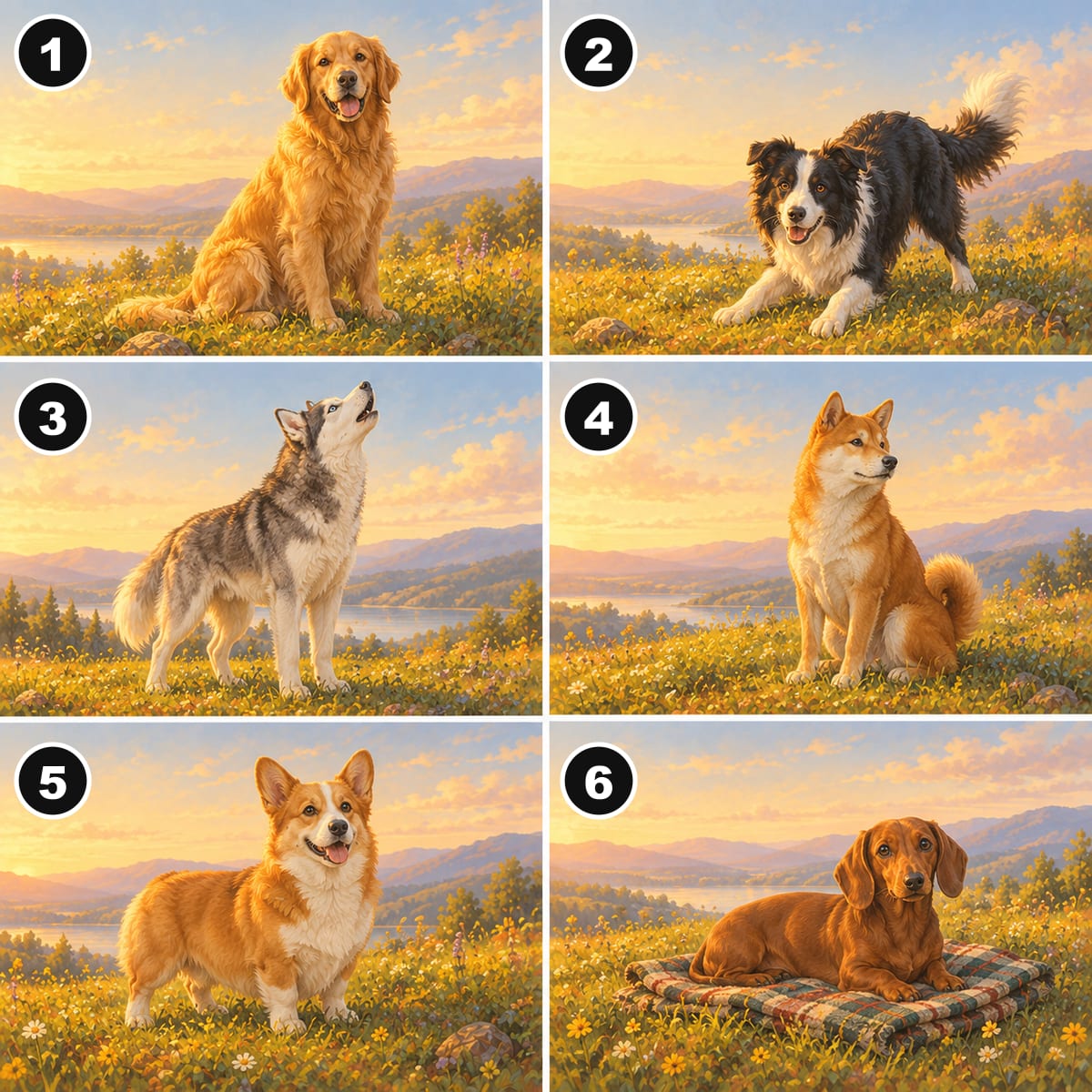
What dog breed am I? Six dogs, pick one
The playful side of this topic: six dogs, one tap, and what your pick hints at about you.
1 question · 6 choices →
Free personality test
Shows how strongly you lean on each scale, which helps when you're asking what kind of daily routine you'd really keep up.
Start →